Free K53 study guide

South African road signs and what they mean

90 of the signs you need to know for your learner's licence, shown with the official South African designs and explained in plain English.

Learn the shapes first

Most signs tell you their type before you read them. Triangles pointing up warn, red rings forbid, blue circles command, rectangles inform or reserve, and only the STOP sign is an octagon. Learn these five rules and you can work out many signs you've never seen.

Control signs

Red octagons and red-bordered inverted triangles. They decide who goes first at junctions.
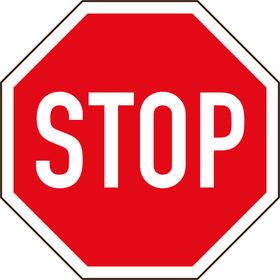
Stop: come to a complete stop at the line, then go only when it is safe road sign
Stop: come to a complete stop at the line, then go only when it is safeAt a STOP sign you must stop completely every time, even if the road looks clear.
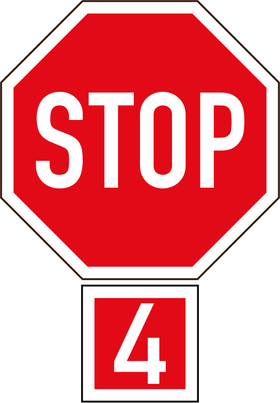
Four-way stop: every direction must stop; the first vehicle to stop goes first road sign
Four-way stop: every direction must stop; the first vehicle to stop goes firstAt a four-way stop, vehicles go in the order in which they stopped.
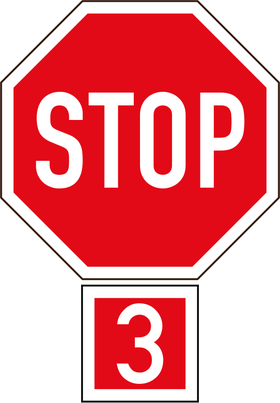
Three-way stop: all three directions must stop; the first to stop goes first road sign
Three-way stop: all three directions must stop; the first to stop goes firstA three-way stop works like a four-way stop: first to stop, first to go.
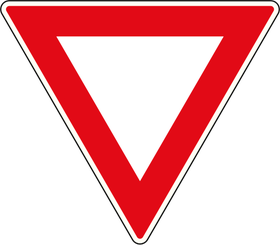
Yield: give way to traffic on the road you are entering, stopping if necessary road sign
Yield: give way to traffic on the road you are entering, stopping if necessaryYou need not stop if the way is clear, but you must give way to traffic on the other road.
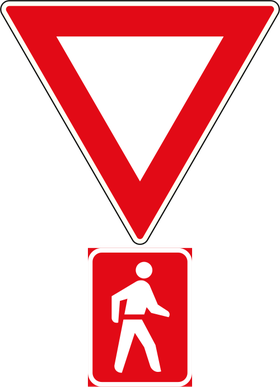
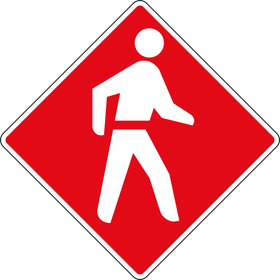
Yield to pedestrians road sign
Yield to pedestriansGive way to pedestrians crossing, stopping if necessary.
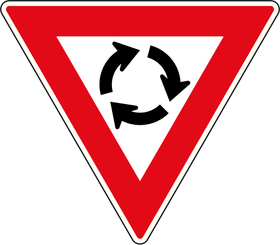
Yield at the traffic circle: give way to traffic already in the circle road sign
Yield at the traffic circle: give way to traffic already in the circleAt a traffic circle, yield to vehicles approaching from your right inside the circle.
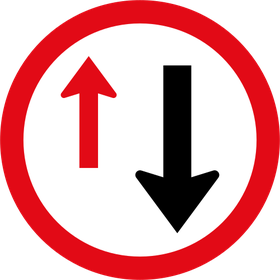
Yield to oncoming traffic: let oncoming vehicles pass first road sign
Yield to oncoming traffic: let oncoming vehicles pass firstUsed where the road narrows: oncoming traffic has right of way.
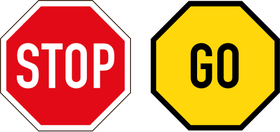
Stop/Go control: obey the sign held by the flag person at roadworks road sign
Stop/Go control: obey the sign held by the flag person at roadworksAt roadworks a person may hold a STOP/GO board. Stop on STOP, proceed carefully on GO.

Command signs

Blue circles with white symbols. You must do what the sign shows.
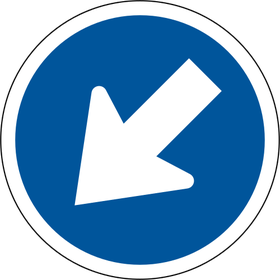
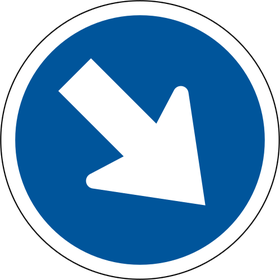
Keep left of the sign road sign
Keep left of the signPass the sign on its left side.
Keep right of the sign road sign
Keep right of the signPass the sign on its right side.
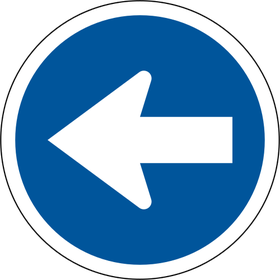
Turn left ahead: you must turn left road sign
Turn left ahead: you must turn leftYou must turn left at the junction ahead.
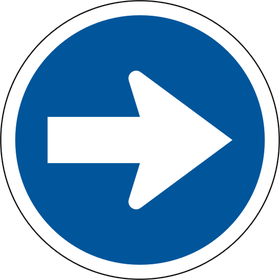
Turn right ahead: you must turn right road sign
Turn right ahead: you must turn rightYou must turn right at the junction ahead.
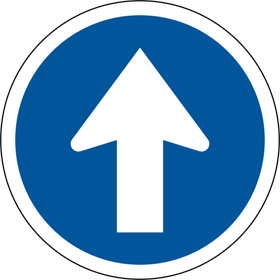
Proceed straight only road sign
Proceed straight onlyYou may only go straight ahead.
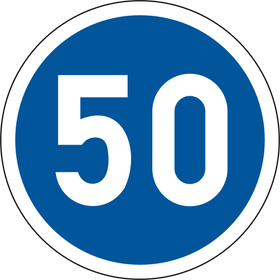
Minimum speed 50 km/h road sign
Minimum speed 50 km/hA number in a blue circle is a minimum speed: do not drive slower than this unless it is unsafe.
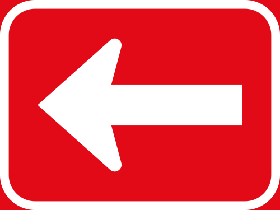
One-way road: traffic may only travel in the direction of the arrow road sign
One-way road: traffic may only travel in the direction of the arrowTraffic on this road moves in one direction only.

Speed limits

A number in a red ring is the highest speed allowed in km/h, not a target.
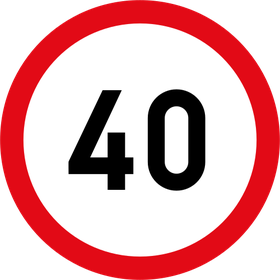
Maximum speed 40 km/h road sign
Maximum speed 40 km/h
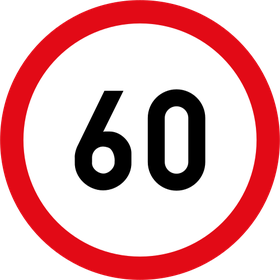
Maximum speed 60 km/h road sign
Maximum speed 60 km/h
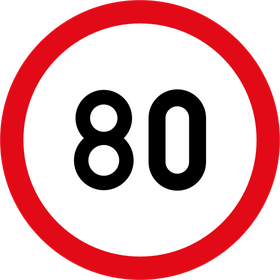
Maximum speed 80 km/h road sign
Maximum speed 80 km/h
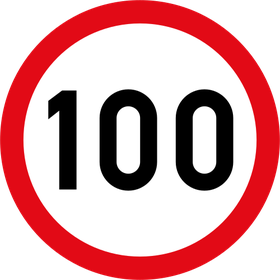
Maximum speed 100 km/h road sign
Maximum speed 100 km/h
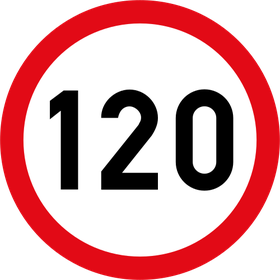
Maximum speed 120 km/h road sign
Maximum speed 120 km/h

Prohibition signs

Red rings, often with a red diagonal bar. Whatever is shown is not allowed.
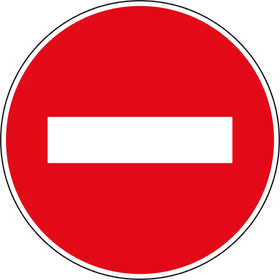
No entry for all vehicles road sign
No entry for all vehiclesYou may not enter. You will often see it at the exit end of a one-way road.
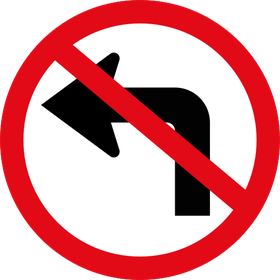
No left turn road sign
No left turn
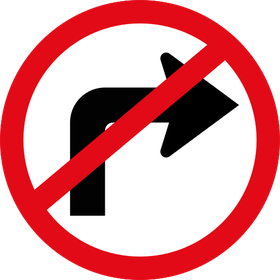
No right turn road sign
No right turn
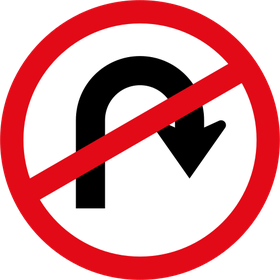
No U-turn road sign
No U-turn
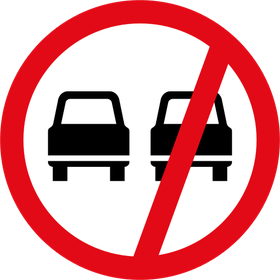
No overtaking road sign
No overtakingYou may not overtake any motor vehicle while this sign applies.
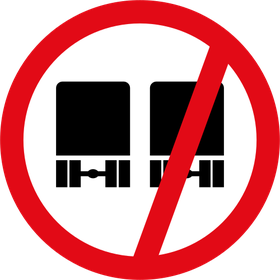
No overtaking by goods vehicles (heavy vehicles may not overtake) road sign
No overtaking by goods vehicles (heavy vehicles may not overtake)This applies to heavy goods vehicles, not to cars.
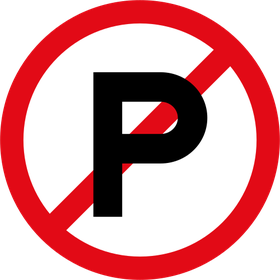
No parking (you may stop briefly to pick up or drop off passengers) road sign
No parking (you may stop briefly to pick up or drop off passengers)Parking is not allowed, but a short stop to load or offload passengers is.
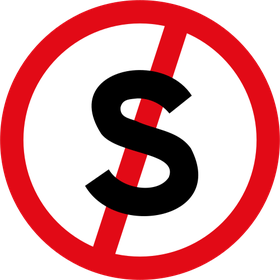
No stopping at all road sign
No stopping at allYou may not stop, not even briefly, except to avoid a crash or when traffic forces you to.
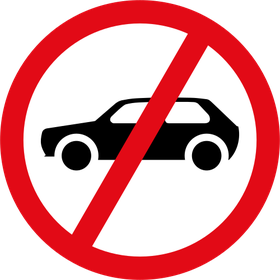
Motorcars prohibited road sign
Motorcars prohibited
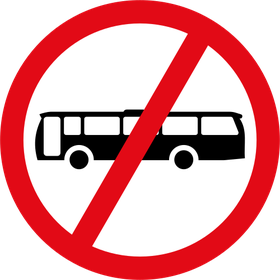
Buses prohibited road sign
Buses prohibited
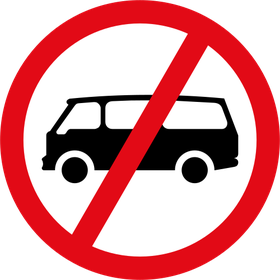
Minibuses prohibited road sign
Minibuses prohibited
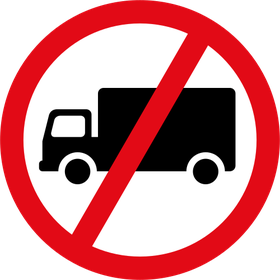
Goods vehicles heavier than 3 500 kg prohibited road sign
Goods vehicles heavier than 3 500 kg prohibited
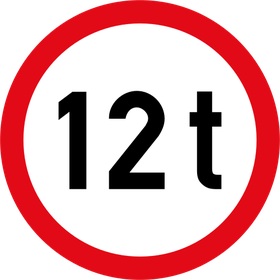
Vehicles with a gross vehicle mass over 12 tonnes prohibited road sign
Vehicles with a gross vehicle mass over 12 tonnes prohibitedThe number shows the mass limit (GVM) in tonnes.
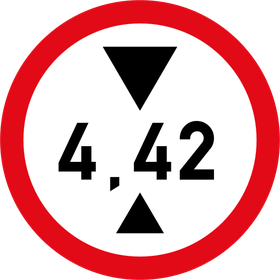
Vehicles taller than 4.42 m prohibited road sign
Vehicles taller than 4.42 m prohibitedThe number shows the maximum height allowed.

Reservation and zone signs

Lanes, parking areas and zones kept for certain road users, and where special rules start or end.
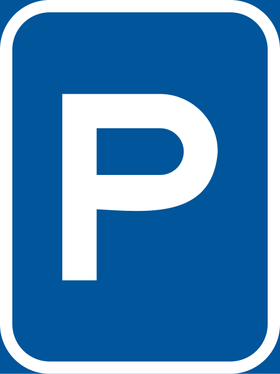
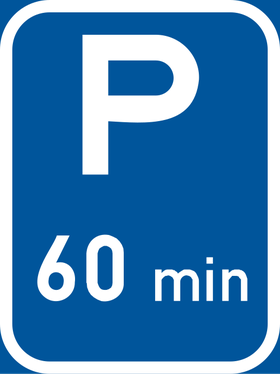
Parking area road sign
Parking areaYou may park here.
Parking allowed for a maximum of 60 minutes road sign
Parking allowed for a maximum of 60 minutesThe number shows the longest time you may park.
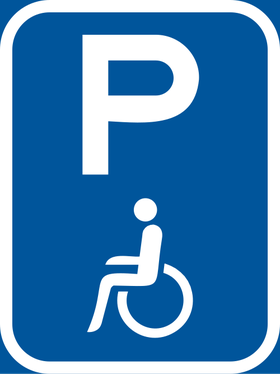
Parking reserved for vehicles carrying disabled persons road sign
Parking reserved for vehicles carrying disabled personsOnly vehicles with a disabled-person sticker may park here.
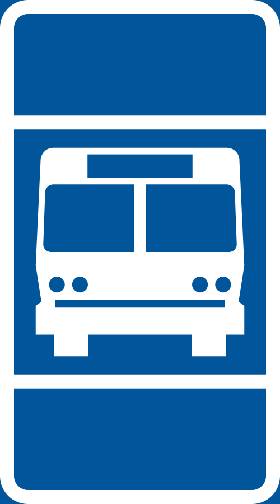
Bus stop road sign
Bus stopBuses stop here. Do not stop or park in the bus stop.
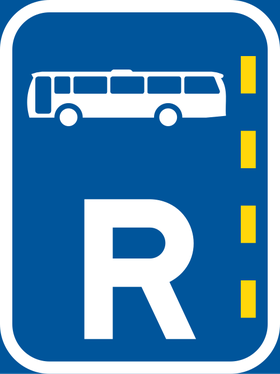
Lane reserved for buses road sign
Lane reserved for busesOnly buses may use this lane.
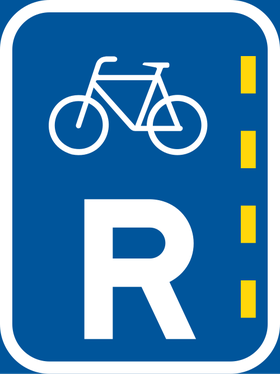
Lane reserved for bicycles road sign
Lane reserved for bicyclesOnly cyclists may use this lane.
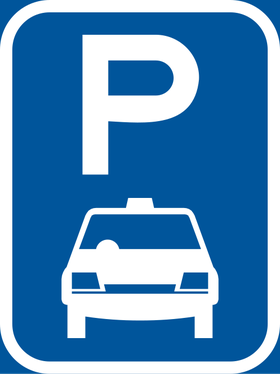
Parking reserved for taxis road sign
Parking reserved for taxisOnly taxis may park here.
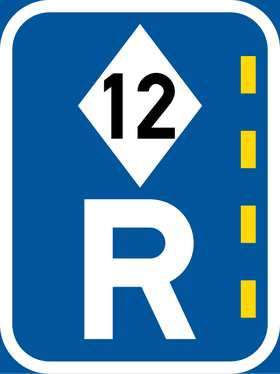
Lane reserved for high-occupancy vehicles road sign
Lane reserved for high-occupancy vehiclesOnly vehicles carrying the minimum number of people shown may use this lane.
Pedestrian priority zone: only authorised vehicles may enter road sign
Pedestrian priority zone: only authorised vehicles may enterPedestrians have priority. Only emergency and other authorised vehicles may enter.
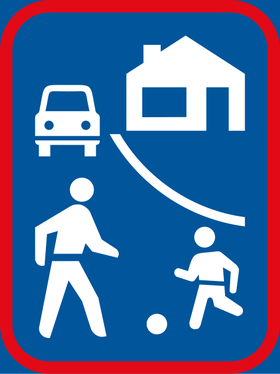
Living street (woonerf) begins: pedestrians and children have priority road sign
Living street (woonerf) begins: pedestrians and children have priorityDrive at walking pace and give way to pedestrians and children playing.
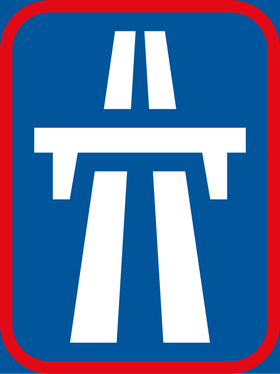
Freeway begins: freeway rules apply road sign
Freeway begins: freeway rules applyPedestrians, animals and some slow vehicles may not use a freeway. You may not stop except in an emergency.
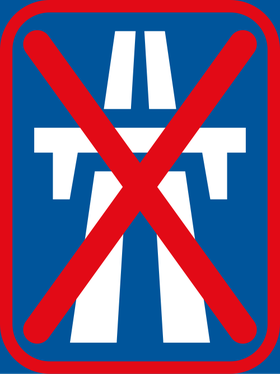
End of the freeway road sign
End of the freewayA diagonal bar across a sign means that restriction or zone ends.

Warning signs

Red-bordered triangles pointing up. They warn of a hazard ahead: slow down and be ready. Yellow versions are temporary signs at roadworks.
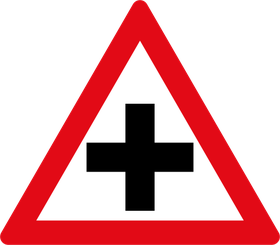
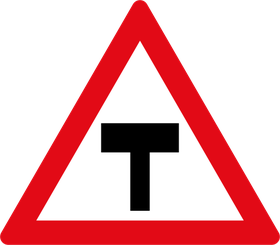
Crossroads ahead road sign
Crossroads ahead
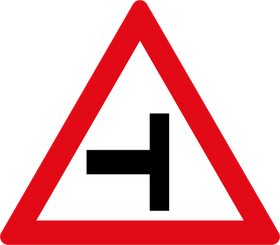
T-junction ahead road sign
T-junction ahead
Side road joining ahead road sign
Side road joining ahead
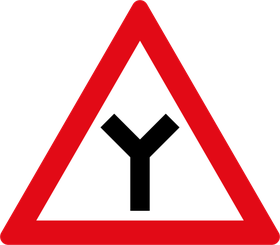
Y-junction ahead road sign
Y-junction ahead
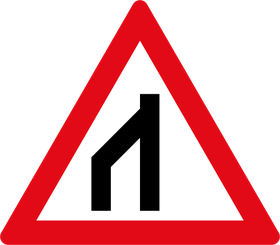
Dual carriageway ends ahead road sign
Dual carriageway ends ahead
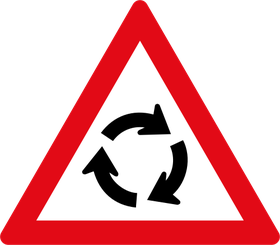
Traffic circle ahead road sign
Traffic circle aheadSlow down and prepare to yield to traffic from your right in the circle.
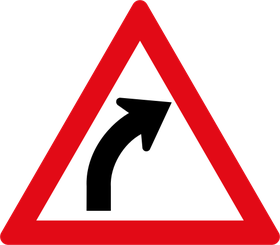
Gentle curve ahead road sign
Gentle curve ahead
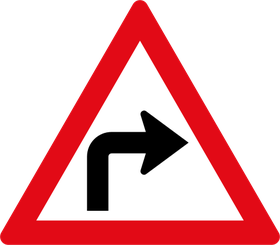
Sharp curve ahead road sign
Sharp curve aheadSlow down before the curve, not in it.
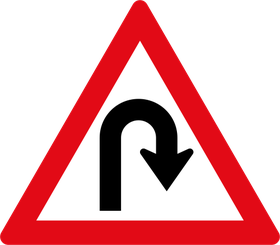
Hairpin bend ahead road sign
Hairpin bend aheadA very sharp bend: slow right down before you reach it.
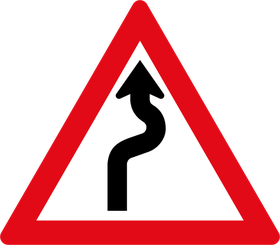
Winding road ahead road sign
Winding road ahead
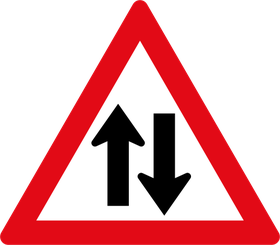
Two-way traffic ahead road sign
Two-way traffic aheadYou are leaving a one-way section: expect oncoming traffic.
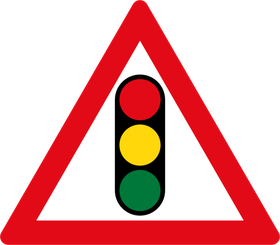
Traffic signals ahead road sign
Traffic signals aheadBe ready to stop at the traffic lights.
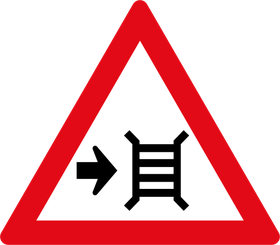
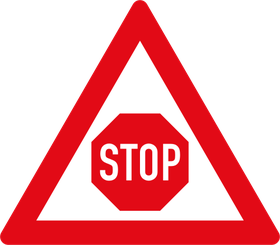
Stop sign ahead road sign
Stop sign aheadPrepare to stop at the junction ahead.
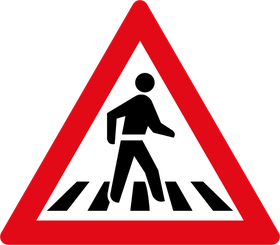
Pedestrian crossing ahead road sign
Pedestrian crossing aheadSlow down and be ready to stop for pedestrians.
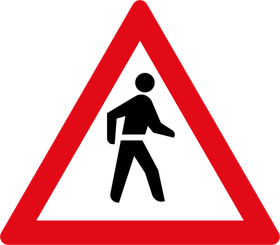
Pedestrians ahead road sign
Pedestrians ahead
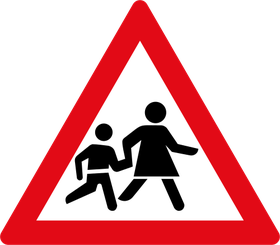
Children ahead road sign
Children aheadChildren may run into the road: slow down.
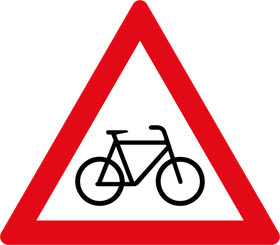
Cyclists ahead road sign
Cyclists aheadGive cyclists plenty of room when passing.
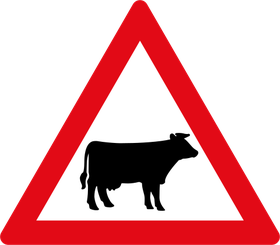
Cattle on the road ahead road sign
Cattle on the road aheadSlow down and watch for animals.
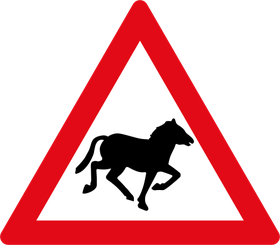
Horses or riders ahead road sign
Horses or riders aheadPass slowly and wide; do not hoot.
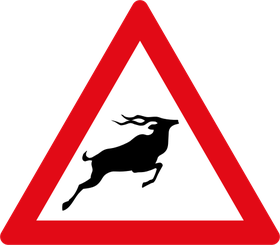
Wild animals ahead road sign
Wild animals aheadWatch for antelope and other wild animals, especially at dawn and dusk.
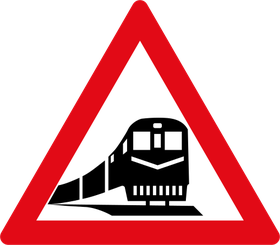
Railway level crossing ahead road sign
Railway level crossing aheadSlow down, look and listen for trains.
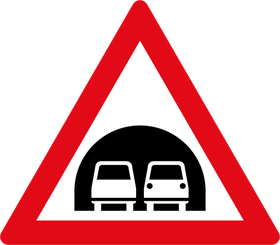
Tunnel ahead road sign
Tunnel aheadSwitch on your headlights before entering a tunnel.
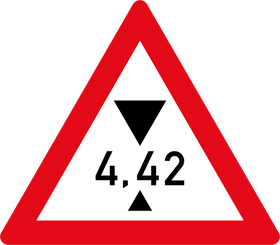
Height restriction ahead road sign
Height restriction aheadTall vehicles must check their height before continuing.
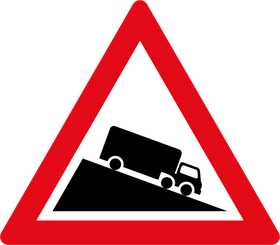
Steep descent ahead road sign
Steep descent aheadSelect a lower gear so the engine helps you brake.
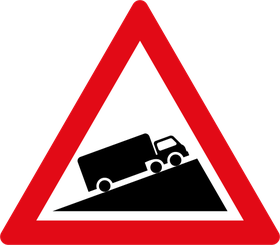
Steep climb ahead road sign
Steep climb aheadBe ready to change down; slow vehicles may be ahead.
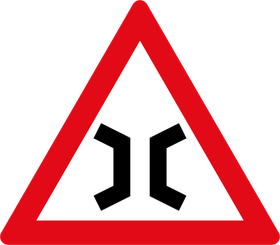
Narrow bridge ahead road sign
Narrow bridge aheadThere may not be room for two vehicles side by side.
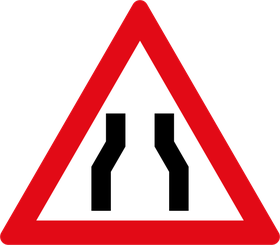
Road narrows from both sides ahead road sign
Road narrows from both sides ahead
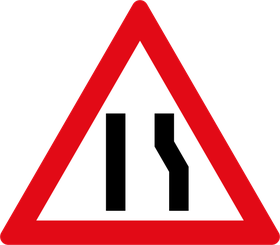
Road narrows from the right ahead road sign
Road narrows from the right ahead
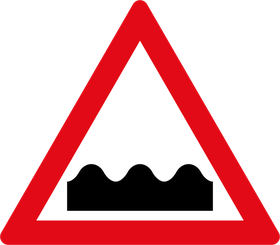
Uneven road surface ahead road sign
Uneven road surface ahead
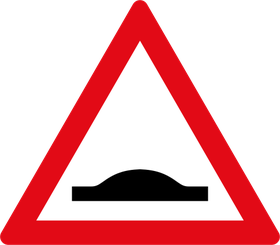
Speed humps ahead road sign
Speed humps aheadSlow down before the humps.
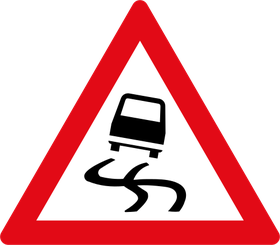
Slippery road ahead road sign
Slippery road aheadSlow down and avoid sudden braking or steering, especially when wet.
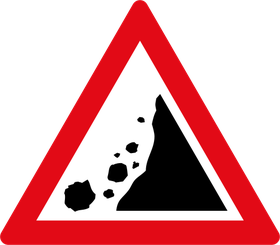
Falling rocks ahead road sign
Falling rocks aheadWatch for rocks on the road and do not stop under the cliff.
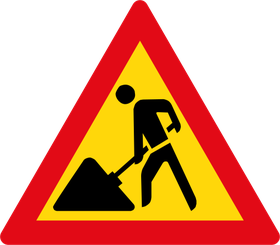
Roadworks ahead road sign
Roadworks aheadTemporary signs at roadworks have a yellow background. Slow down: people and machines may be working on the road.
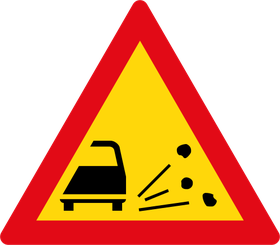
Loose gravel or loose surface ahead road sign
Loose gravel or loose surface aheadSlow down: stones may be thrown up and braking distance is longer.
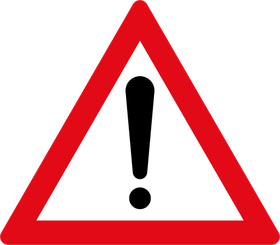
General danger ahead road sign
General danger aheadA hazard not covered by another sign. Slow down and look for the cause.
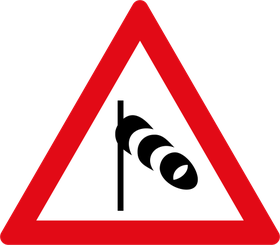
Strong crosswinds ahead road sign
Strong crosswinds aheadHold the steering wheel firmly, especially when towing.
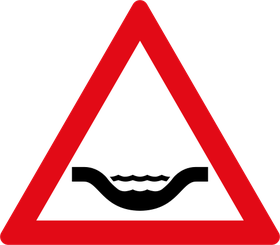
Drift (low-water crossing) ahead road sign
Drift (low-water crossing) aheadDo not drive through if water is flowing over the road and you cannot see the surface.
Cattle grid (motor gate) ahead on the right road sign
Cattle grid (motor gate) ahead on the right

Information signs

They guide and inform you about the road ahead rather than give an order.
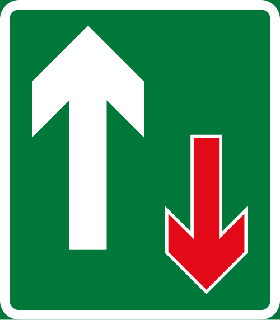
Oncoming traffic must yield to you at the narrow section ahead road sign
Oncoming traffic must yield to you at the narrow section aheadThis is the partner of the "yield to oncoming traffic" sign: here you have right of way, but still drive with care.
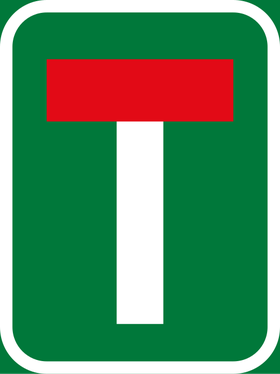
Dead end (cul-de-sac): no through road road sign
Dead end (cul-de-sac): no through roadThe road ahead does not lead anywhere.
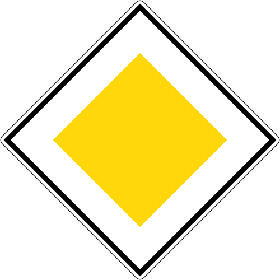
You have right of way on this road road sign
You have right of way on this roadYou are on the priority road, but still watch for vehicles that do not yield.
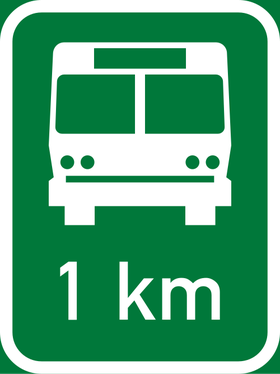
Bus stop ahead road sign
Bus stop aheadWatch for buses pulling in and out and for pedestrians.
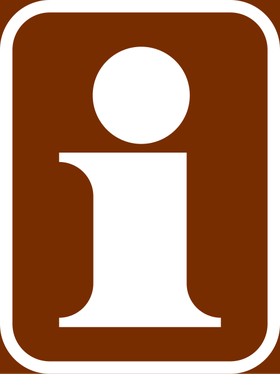
Tourist information road sign
Tourist informationTourist information is available here.
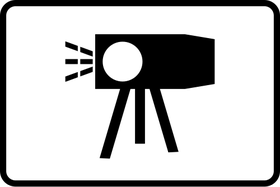
Speed camera (traffic law enforcement) ahead road sign
Speed camera (traffic law enforcement) aheadThis plate warns that speed or traffic cameras are in use.

Can you get 23 out of 28?

That's the pass mark for the signs section. Test yourself with 15 free questions, no sign-up.

Start the free test

Questions

How many questions about signs are in the learner's test?

The light motor vehicle learner's test has 28 questions on road signs, signals and markings, and you need 23 right to pass that section. It also has 28 rules-of-the-road questions (pass mark 22) and 8 vehicle-control questions (pass mark 6).

What is the difference between a STOP sign and a YIELD sign?

At a STOP sign you must come to a complete stop every time, even if the road is clear. At a YIELD sign you only stop if you need to give way to traffic on the road you are entering.

What does a red diagonal bar on a sign mean?

It shows that the action in the sign is prohibited, for example no U-turn or no parking. A diagonal bar across a whole sign, such as the freeway sign, means the restriction or zone ends.

Are these the official South African road signs?

Yes. The pictures are the official designs from the SADC Road Traffic Signs Manual used in South Africa, from Wikimedia Commons, where they are in the public domain.

Sign artwork: official SADC designs via Wikimedia Commons (public domain). Image credits.